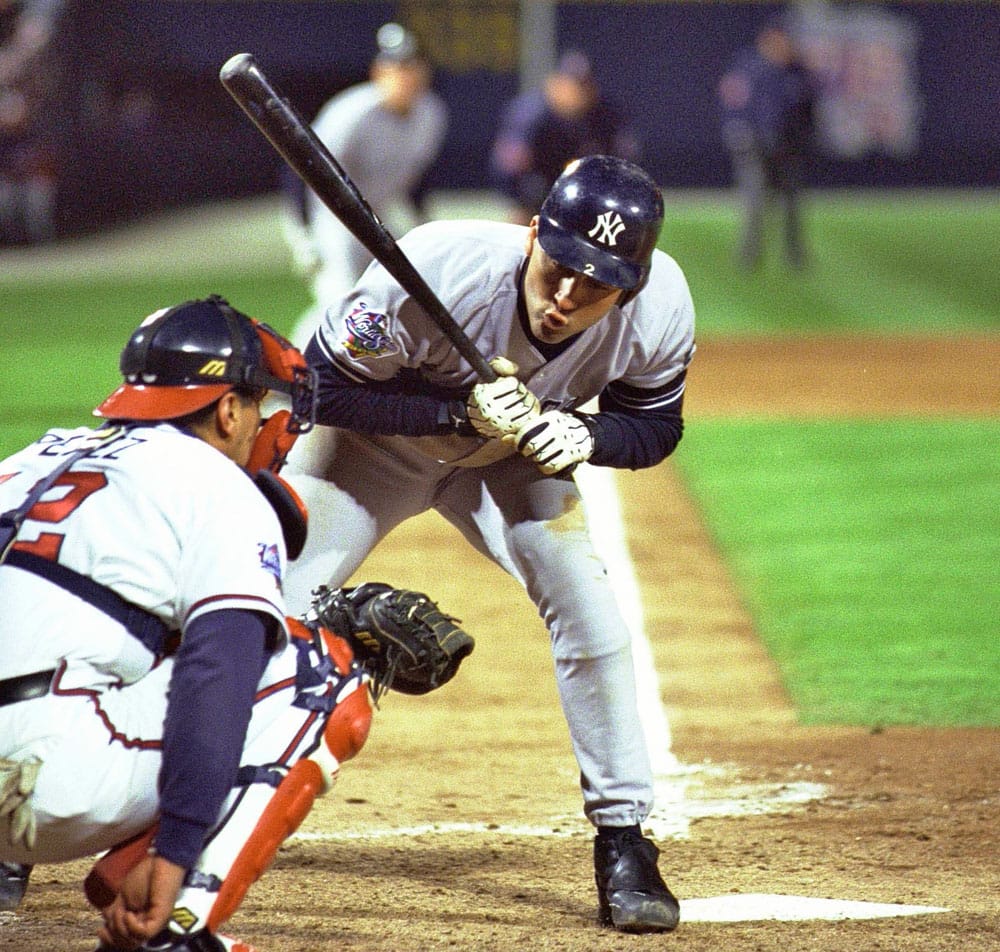
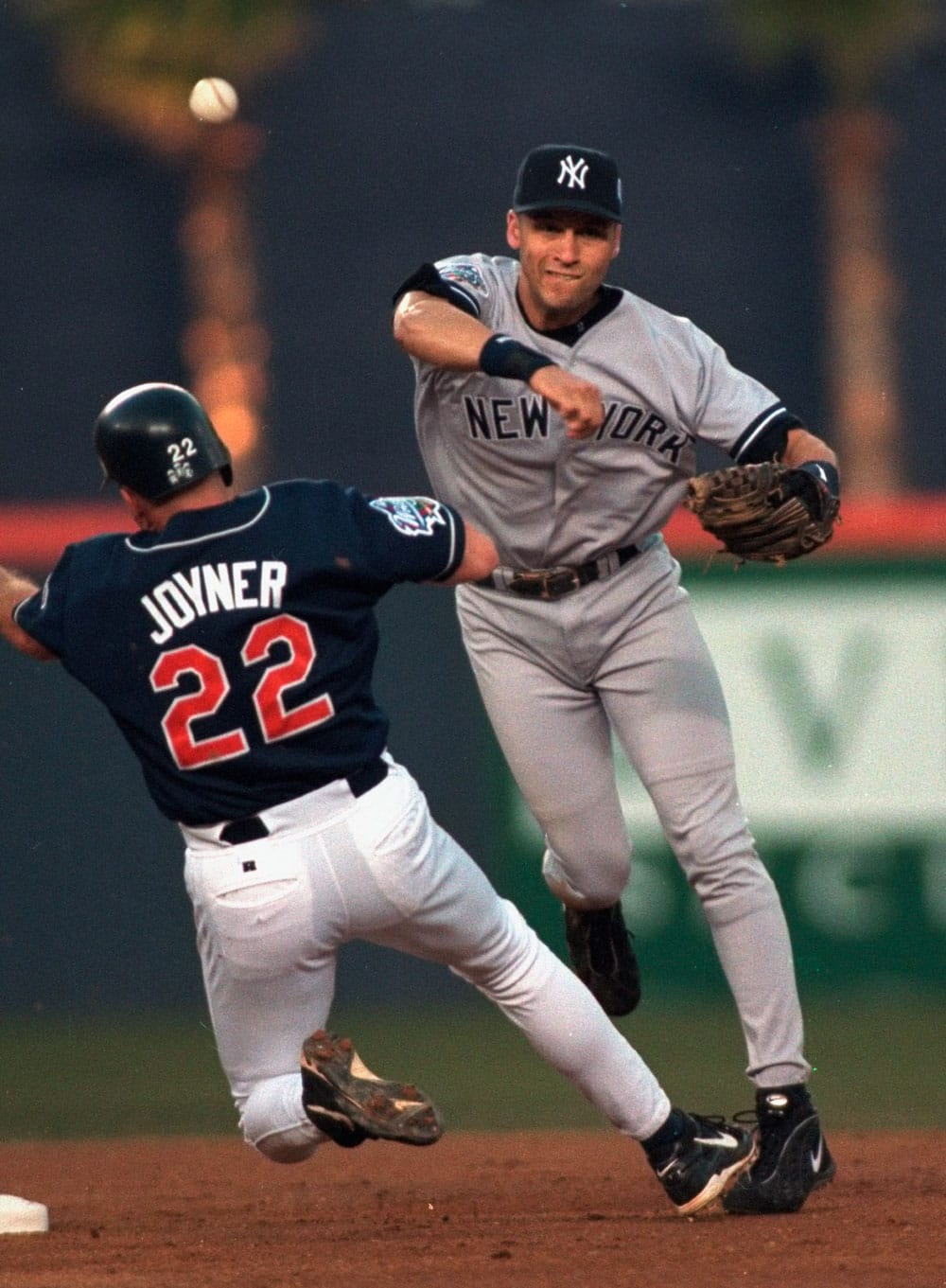
The only time Jeter left a postseason game before the eighth inning was when the Yankees had a chance to win the 2001 World Series in Phoenix. Their Game 6 potential clincher deteriorated rapidly when the Diamondbacks hit Andy Pettitte like they knew what was coming. It turns out they did: Pettitte was tipping his pitches. The score was 4–0 when Torre replaced him in the third inning with a journeyman reliever named Jay Witasick. Eight of the next nine batters raked Witasick for hits. By the time Torre pulled Witasick, it was 13–0; the game was so hopeless that in the fifth Torre pulled Jeter, catcher Jorge Posada and first baseman Tino Martinez. Jeter left the dugout for his locker to change from his metal spikes to turf shoes. Witasick, who had allowed eight earned runs, still the most in World Series history, sat in the training room. What Jeter heard from him there infuriated him.
“Well,” the pitcher said, “at least I had fun.”
“What!” Jeter shouted. Posada would later say that Jeter “jumped all over” the pitcher: “That was the angriest I’ve ever seen him.”
Witasick had violated a core Jeter belief: He took losing too easily. I asked Jeter if it bothered him when teammates didn’t want to win as badly as he did. “Of course,” he says. “I think most people want to win at anything. But the thing that separates you is if losing bothers you.”
I ask him if he can change a teammate in that regard.
“I don’t think so,” he says. “Either something means something to you or it doesn’t. I don’t think you can teach someone to have something mean something to them, do you know what I mean?”
Jeter grew up in a Yankees minor league system in which winning was more important than player development. For instance, the catering for Jeter’s Rookie League team in Tampa—strip steak, meatloaf, corn dogs—depended on how well the team was playing. “Losing really bothered the Boss,” Jeter says, referring to late Yankees owner George Steinbrenner. “It was stressed—preached to us—on every level of the minor league system that winning was the most important thing, which is why I always got along so well with the Boss. We had the same mind-set.”
Truth is, Jeter was wired to win before he went to work for Steinbrenner. “I probably got it from my dad,” he says. “He used to beat me at everything when I was younger. He never let me win. No, no, no, not at all. You’ve got to earn it. Things aren’t given to you.”
Today we are sitting on midnight-blue leather chairs in a room off the home clubhouse at Yankee Stadium. Some of Jeter’s most important work is done in these rare rooms where cameras still don’t venture. The space is important to Jeter because he knows he can’t win by himself. His gift is getting others to buy into the group concept of winning. It’s the Dwight D. Eisenhower view of leadership: not the simple execution of authority but, as the former president put it, “the art of getting someone else to do something that you want done because he wants to do it.”

TEAM PLAYER
Since joining the Yankees Jeter has taken counsel and inspiration from his teammates, evolving into a leader who puts a premium on loyalty and commitment.
Rob Tringali Jr.
Getting a team to buy into everything it needs to do to win is what drives Jeter. This is apparent when I ask him what he will miss most about baseball. “Competing with your teammates,” he says. “One of the biggest things about leadership is you have to get to know your teammates. You have to get to know who you’re leading because there’s different buttons you push with different people. Some guys you can yell and scream at, and some guys you have to put your arm around. You can do that only if you get to know them as people.”
I remind Jeter about his reputation for how he treats teammates, media members or associates who cross him. Jeter is said to draw a clear line when it comes to loyalty. Cross it once—dare to wrong him—and he coldly wants nothing more to do with the offender. You’re off his team for good.
“Yeah, I’ve heard that about myself,” he says. “But like what? You have to give me an example.”
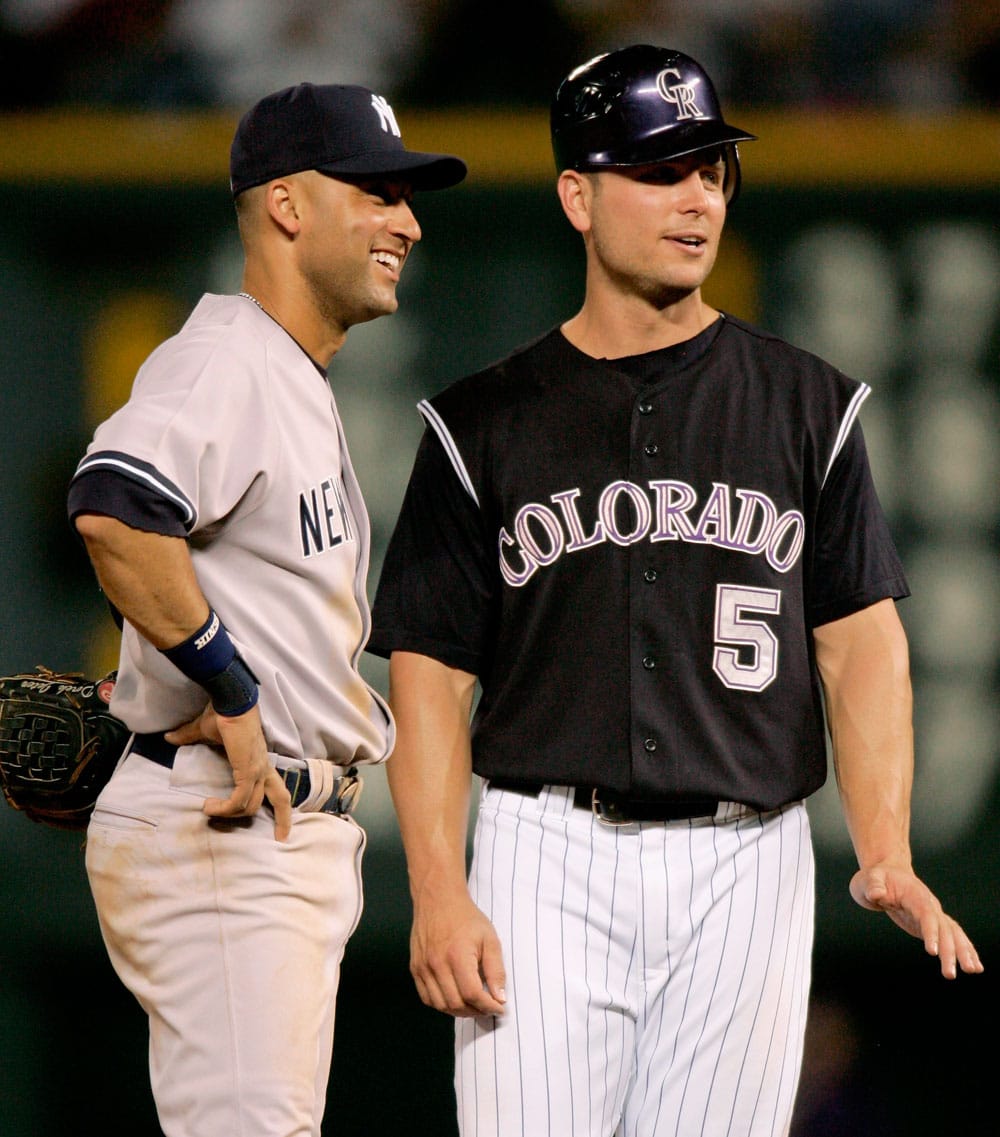
I bring up Chad Curtis, a former teammate. In 1999 the Yankees and the Mariners engaged in a nasty bench-clearing brawl. As players and coaches were being separated, Jeter and Alex Rodriguez, then with Seattle, were smiling and chatting with one another. Curtis engaged in an argument with Jeter in the dugout, then continued chastising him after the game in the clubhouse and in front of reporters. Four months later the Yankees traded Curtis to Texas for two minor leaguers.
“Now, see, don’t even bring him up,” Jeter says of Curtis, who last year was sentenced to seven to 15 years in prison for six counts of criminal sexual conduct. “I’m not going to throw stones when he’s down. People think [about my reputation], ‘Oh, there’s one little incident and he’s done with him.’ No. You may not know it because I choose not to speak about it, and if someone does something, they’re not going to tell you about it. So there’s more to stories.”
So I try again. I mention Rodriguez. The two of them were close as young players. Then in 2001, Rodriguez took an unprovoked shot at Jeter in an Esquire story: “Jeter’s been blessed with great talent all around him. He’s never had to lead. . . . You go into New York, you wanna stop Bernie [Williams] and O’Neill. You never say, Don’t let Derek beat you. He’s never your concern.”
Rodriguez would later admit to using steroids at the time. He became Jeter’s teammate in 2004; their relationship was cordial but lukewarm. Rodriguez was banned from baseball in Jeter’s final season for his continued use of performance-enhancing drugs.
“Don’t bring it up,” Jeter says quietly, motioning to turn off the tape recorder. He has to go now. It’s time to hit.
Dodgers scout, Andy High, filed this report on the Yankees great in his last month:
“He can’t stop quickly and throw hard. You can take the extra base on him. . . . He can’t run and won’t bunt. . . . His reflexes are very slow, and he can’t pull a good fastball at all.” Two months after the report ran in the Oct. 22, 1951, issue of Life magazine, Joe DiMaggio retired. DiMaggio hit .263 that season, 62 points below his career average. He was 36, complaining as he left how the introduction of night baseball took years off his career.
I ask Jeter what he will miss the least about baseball. “The schedule,” he says. “I won’t miss that. I mean, eight o’clock game tonight, we get into Tampa at four in the morning and we have to play another game? No, I won’t miss that.”
This year Jeter launched his own imprint with Simon & Schuster, Jeter Publishing. This week it released its first title, The Contract, an inspirational novel for young readers based on his childhood. He still wants to own a major league team someday. But, next year?
“That’s the beauty of it. I don’t know,” he says. “You know what I want to do? Wake up one weekend and not have to go anywhere and do nothing.
“There are things I want to do in the future. But I think for me I need to get away for a while first. Come see me in eight months, and then maybe I can answer that question.”
At the moment he is occupied with trying to scratch out a few hits. Ballplayers, even the greatest of them, make for lousy novelists: They write terrible endings. Ruth quit midseason in 1935 with a .181 average. Mickey Mantle was a .237 hitter on his way out in ’68. Mike Schmidt, hitting .203, suddenly left in tears on an ’89 road trip. Cal Ripken hit .239 in his exit year of 2001.
Jeter is no different, except for how much he has played this season: 139 games. Only four Hall of Famers ever played more in their last year: Jesse Burkett of the 1905 Red Sox (148), Al Kaline of the ’74 Tigers (147), George Brett of the ’93 Royals (145) and Mantle (144). None of them hit better than .266.
The slow, painful death of a baseball career eventually fades from memory, as it did for the Mick and DiMag and the rest, and in our minds we keep them forever young. For Jeter, the apex of his youthful skills and his mastery in the spotlight was Oct. 26, 2000. It was the night the Yankees won a contentious, nerve-jangling, all–New York World Series against the Mets.
The Mets had seized momentum in the Series with a win in Game 3. Shortly before Jeter came to bat to begin Game 4, he smiled at Torre and said, “Don’t worry, Mr. T, I got ya.” Then he hit the first pitch of the game for a home run. The Yankees won 3–2. They were losing Game 5 in the sixth inning 2–1 when Jeter did it again, homering to tie the score. His postseason games were beginning to look as predictable as a MacGyver episode.
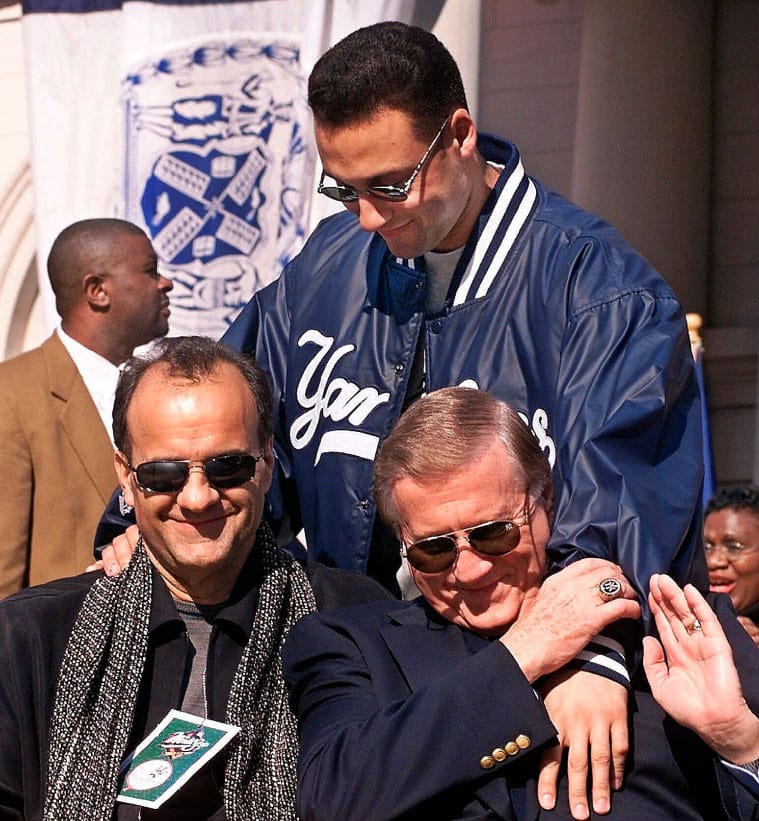
YANKEE SPIRIT
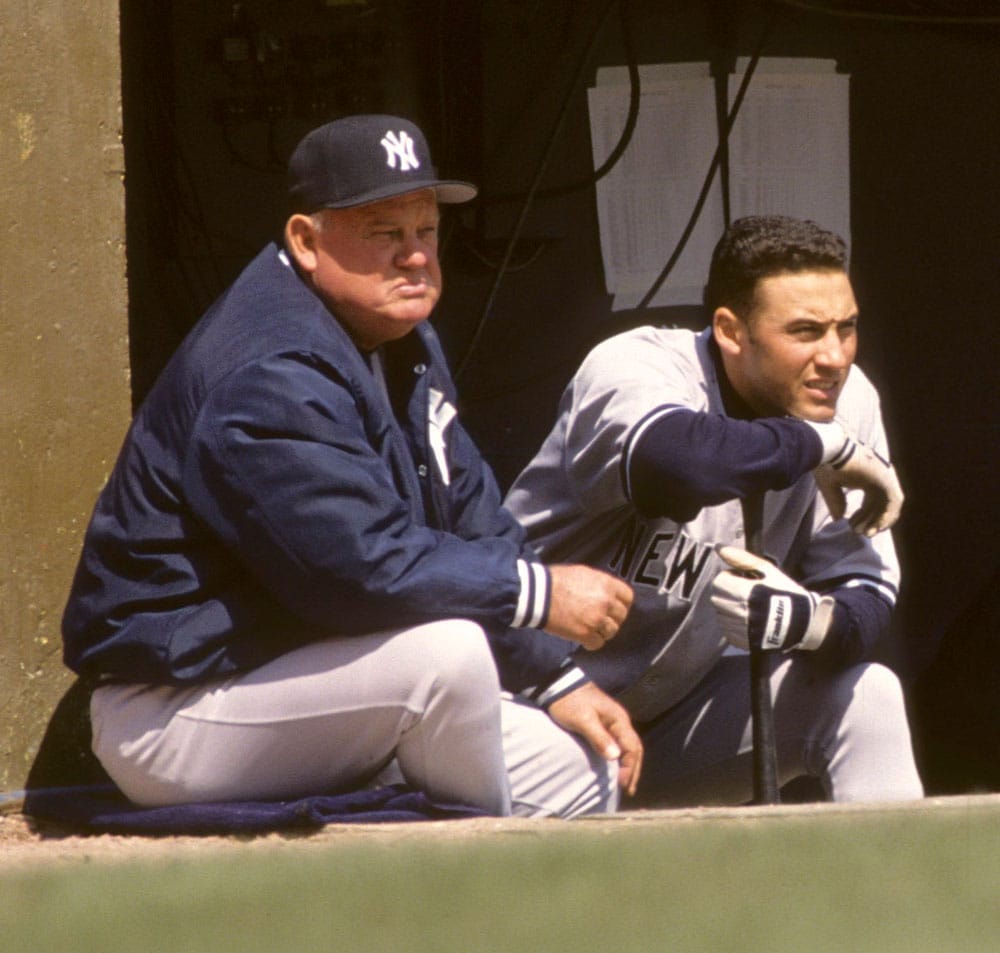
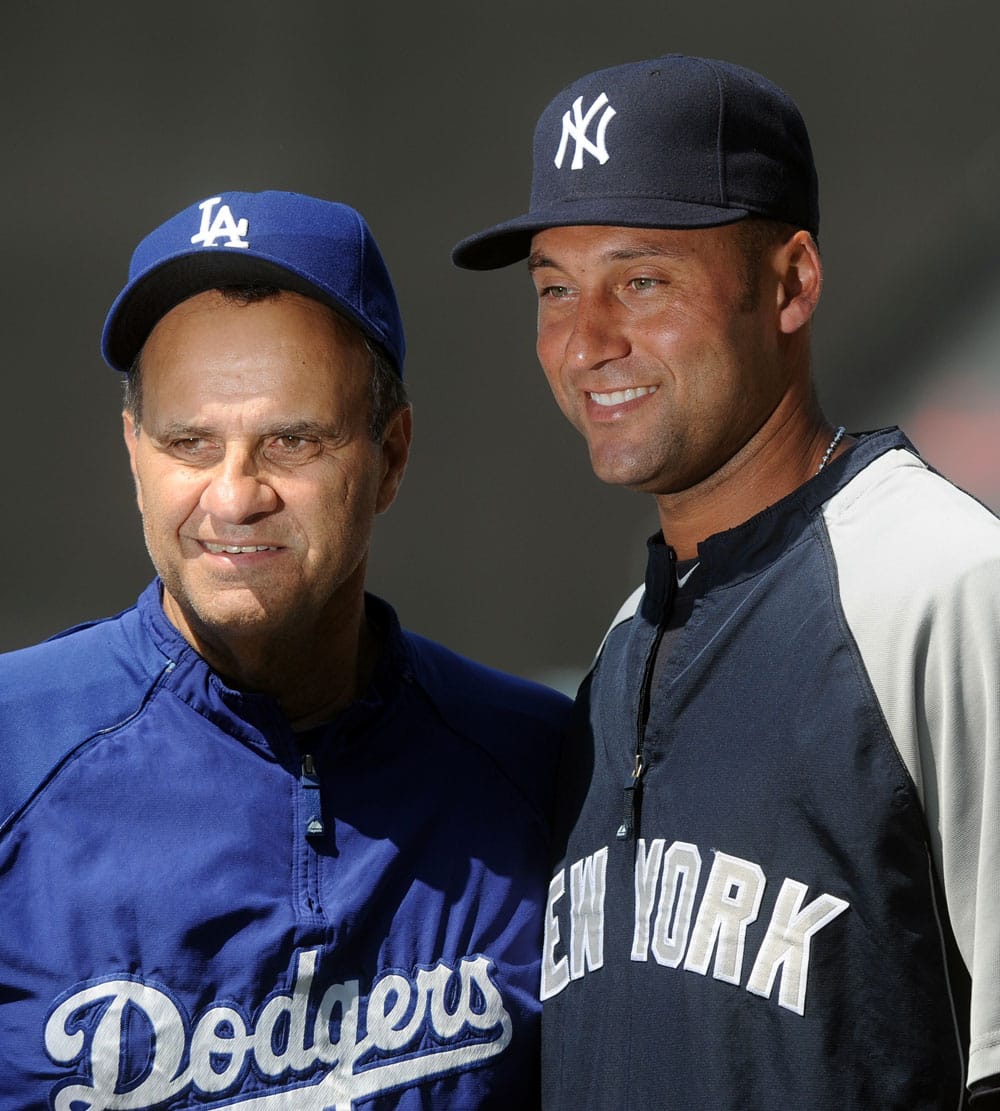
Jeter’s confidence and humor impressed Torre (left) from the start, while his abhorrence of losing forged a lasting bond with the Boss (right).
Richard Drew/AP
Jeter had become a regular of fall prime-time programming. October night after October night, there he was in the middle of a rally with the same twinkle in his eye he showed Torre, as if he had the advantage of having read the script ahead of time. It wasn’t always that way. In his first postseason game, a loss against Texas in the 1996 ALDS, Jeter ended three innings with a total of six runners on before managing a hit his last time up. “Everyone wrote I was nervous and overmatched because I was a rookie,” he says. “Too many people look at the result, and they want to make an issue of how someone is feeling inside. It just wasn’t meant to be.”
Torre still was learning about his rookie shortstop then. He wasn’t sure if he needed to talk to the kid, settle him down. He kicked around the idea in his head until Jeter happened to walk past his office on his way out of the clubhouse that night. Jeter stuck his head into the doorway.
“Hey, Mr. T, make sure you get some sleep,” Jeter said with that twinkle. “Tomorrow’s the biggest game of your life.”
Torre smiled and shook his head at the kid’s confidence. The next night Jeter went 3 for 5, and the Yankees won 5–4. Beginning that night and up until the 2001 World Series, the Yankees won 76% of their postseason games (53–17) and 93% of their postseason series (14–1). Jeter batted .320 in that stretch.
Jeter is a career .310 hitter in the regular season and a .308 hitter in the postseason. He plays in the vein of Ernest Hemingway’s answer when Dorothy Parker asked him, “Exactly what do you mean by guts?” Replied Hemingway, “I mean grace under pressure.”
“I think part of that is focus,” Jeter says. “So is work ethic. You do things over and over again, and when you get in a situation you like to think it comes natural. I think there has to be a mind-set that you’re not afraid to fail. I’m not afraid to fail. I’ve done it quite a bit. The calmer you are, the more the game slows down for you, and I think part of that is controlling your emotions.”
I go back to the night of Oct. 26, 2000, the apex. It wasn’t just the home run, or that he had just become the first man to be named the MVP of the All-Star Game and the World Series in the same year. I walked out of the park with Jeter that night, exiting by way of the warning track in leftfield and out a gate in centerfield. Dressed in a slick, quicksilver suit with a silk white T-shirt beneath, he walked past New York City mayor Rudy Giuliani, who was playing catch in the Yankees’ bullpen, and Placido Domingo, who was in leftfield giddily shouting to Jeter that he had called his home run, and headed to a car to meet his date, Miss Universe, for a party at a Manhattan nightclub that would run until 5 a.m. in which people paid $12,000 to reserve a table in the inner sanctum near Jeter. He was 26 years old and already a four-time world champion. It was as dizzying as a Fellini movie, only real. Yet Jeter somehow stayed on balance. How could he do it?
That night at the club, trying to shout above the music and into his ear, I told Jeter that I needed to arrange an interview with him. He told me he would call me in two days: He was going out to dinner with his parents the day after tomorrow and would call me at 8 p.m., after they were done. While driving home that night I realized I had made a terrible mistake—he had my number, but I didn’t have his. My entire story, which now would be up against its deadline, hinged on an athlete remembering to call me two days after saying he would in the wee hours at a Manhattan nightclub. I sweated out two days.
And then, precisely at 8 p.m. on the second night, my phone rang. It was Jeter: Dinner with Mom and Dad was great; meet me at my apartment.
Who does that? Who wins the World Series MVP, dates Miss Universe, eats dinner with his parents, remembers to call a reporter and—the first thing I noticed when I walked through his door was an ironing board, iron still at the ready—presses his own clothes? This is who: Dot and Charles’s son.

ALL IN THE FAMILY
Dot and Charles taught Derek and his sister, Sharlee (here in 2008, before the final game at the old Yankee Stadium), to focus on the positive.
Jim McIsaac/Getty Images
Dot grew up as one of 14 children of a white church handyman in New Jersey. Charles, who is black, was raised by his mother in Alabama and became a substance-abuse counselor. They never permitted Derek to use the word can’t around the house. Anything was possible with hard work. There is no doubting whence comes his distaste for negativity.
“My parents are probably the most positive people you’ll meet,” Jeter says. “They’re good to talk to, especially when you’re struggling. They try to find something good that you’ve done. You could be 0 for 100, and it’s, ‘Oh, you’ll get ’em tomorrow. You had some good swings.’ And even though you may have been thinking, ‘I did have some good swings,’ it feels good to hear someone say it.”
Dot and Charles still go to many of their son’s games. “It means a lot,” Jeter says. “It’s a comforting thing. It sounds funny saying that—I’m 40 years old now! They’re not there all the time, but when they’re there, I always know where they are.”
It is beginning to come into focus. How many people influence a public life? “Oh, man, if I named them all, you’d have two pages just of names,” he says. “You know, like the movie credits that roll at the end.” But look back at the names he did bring up, and there is a theme. They all go back to before he became so familiar: Denbo, Butterfield, Williams, Raines, Torre.
Then I come across this: a former teammate, Matt Ruoff, this month telling The Press Democrat of Santa Rosa, Calif., “You always wanted to sit by him. I know that sounds weird. But Derek gave off a presence.” Ruoff told a story about how Jeter went to the mound one time when one of the Yankees’ pitchers was struggling and said, “You got nothing to lose. Stay with your changeup and curve. Give me some ground balls. You’re putting me to sleep out there.”
Here’s the kicker: These were the Gulf Coast League Yankees of 1992. The story could have been told by a teammate in 2014.
That’s how you prosper across two decades in New York as the most familiar player there ever was: You were nearly fully formed before the klieg lights hit. The mortar of the man had set.
This season has been one long goodbye for Jeter. The Yankees threw a day for him on Sept. 7, when he thanked the fans for doing more for him than he did for them. “Did you see my hand shaking?” he says. “I was nervous. I get nervous quite a bit. I just hide it. I get butterflies before every game. It means you care.”
It’s not just the fans in New York. Every last stop for Jeter has brought an outpouring of thanks from fans.
“It’s been surreal,” Jeter says. “I’d be lying if I said it didn’t feel good, because I guess they appreciate how you played. But more importantly, if you’re an Orioles fan, a Rays fan, a Tigers fan, and you’ve been going to games over the last 20 years, whether they beat us or we beat them, there’s a good chance that I was a part of it. And our job—we’re playing a game—but our job is to entertain and bring joy to people, and I think people have appreciated it.
“I always dreamed of playing in the major leagues. But everything that comes along with it couldn’t have possibly been part of the dream. Because it’s been much better.”
The last ovation will come on Sept. 28 at Fenway Park in Boston. All these people in all these cities are cheering not just a career with more base hits than all but five men who ever played the game. They also are cheering how he did it. And when they do, they also are cheering how Dot and Charles prepared him for the most brightly lit baseball life there ever was.